

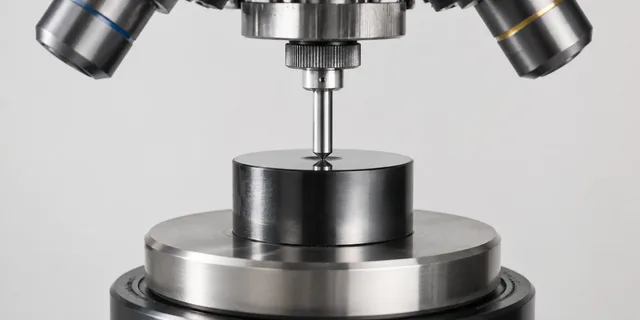
IQMet: AI-powered in-line quality inspection of metal components
The IQMet research project uses AI models to enable non-destructive, inline quality control of the microstructure of metallic components based on laser-ultrasound data.
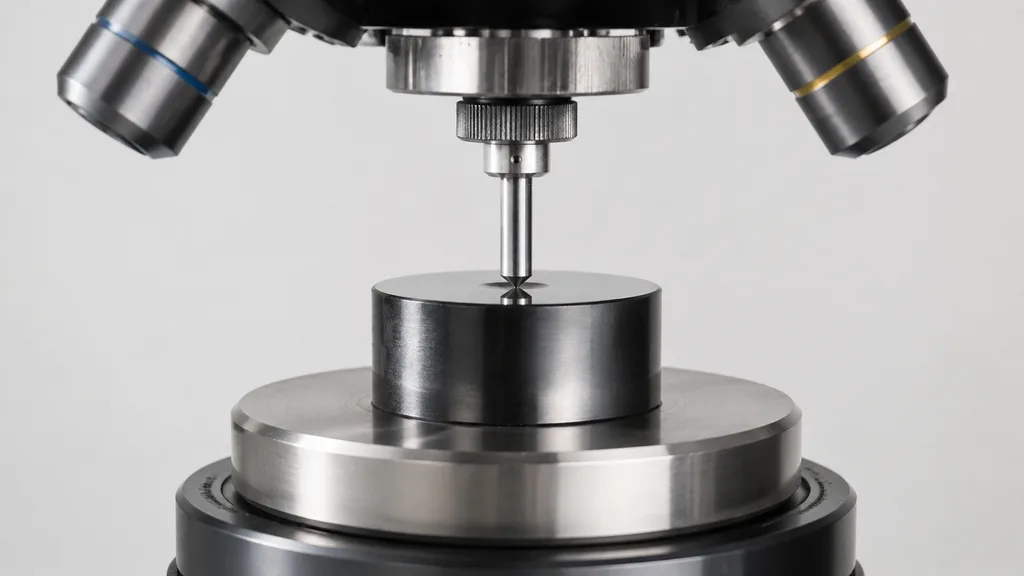
Non-Destructive Quality Control of Metallic Components
The metallic microstructure plays a key role in the mechanical properties of components. Surface hardening reduces wear and thus extends service life, for example at shaft bearing locations in engines, generators, or rail wheels. State-of-the-art quality assurance is currently performed only statistically through microscopic examination of drawn and fractured specimens. However, there is a great need for a non-destructive, inline-capable inspection method, since sampling is not always possible and 100-percent inspection is necessary for continuous quality improvement.
AI-Assisted Analysis of Laser Ultrasound
Laser ultrasound has already shown great potential for measuring the depth of hardening in some steels. However, conventional signal analysis—such as averaging and filtering—has limited capabilities, as it provides little additional information from the apparent noise in the ultrasound signals. AI models are expected to interpret the ultrasonic data significantly better after a training phase. Advanced methods for feature engineering and machine learning are used, including regression, classification, and anomaly detection models for time-series analysis, as well as deep learning approaches for image data analysis.
Approaches to Annotation
To address the bottleneck in annotation, the project is pursuing several approaches: research into a semi-automated framework that enables domain experts to annotate laser ultrasound data; the combination of ML approaches with correlative data from microscopy; and the use of simulated data, in which the ground truth is generated alongside the data. In this way, IQMet combines the strengths of non-destructive testing with advanced data analysis techniques for fast and accurate microstructural analysis.
Contribution of RISC Software GmbH
RISC Software GmbH is participating as a project partner and is contributing its expertise in industrial data processing and machine learning (time-series and image analysis).
This project is funded as part of the #upperVISION2030 economic and research strategy of the state of Upper Austria and by the Austrian Research Promotion Agency (FFG).

Project partners


Project details
- Project Short Title: IQMet
- Full Project Title: AI-Supported, In-Line Measurement Methods for Determining the Quality of Metallic Components and More Efficient Hardening Processes
- Call for Proposals: AI Region Upper Austria 2024
- Project partners:
- Research Center for Non-Destructive Testing GmbH (Project Coordination)
- RISC Software GmbH
- STIWA Advanced Products GmbH
- BRP-Rotax GmbH & Co. KG
- Duration: February 2025–January 2028 (36 months)
Ansprechperson
Project management

Dr. Roxana Holom, MSc
Data Science Project Manager & Researcher