
Medical AI and Simulation
Artificial intelligence for more precise diagnoses and personalized therapies
mehr erfahren
From April 14 to 15, 2026, Leoben hosted AIRoV 2026, the Austrian Joint Symposium on Artificial Intelligence, Robotics, and Computer Vision. RISC Software GmbH played an active role this year: Ahmed Alshenoudy, M.Sc. and DI Philipp Moser, PhD from the Research Unit Medical Informatics co-organized the “AI in Medicine” workshop, creating for the first time an Austria-wide forum bringing together interdisciplinary groups around AI applications in healthcare. Fabian Greifeneder and Maja Nikolic additionally presented current research results as part of the poster session.
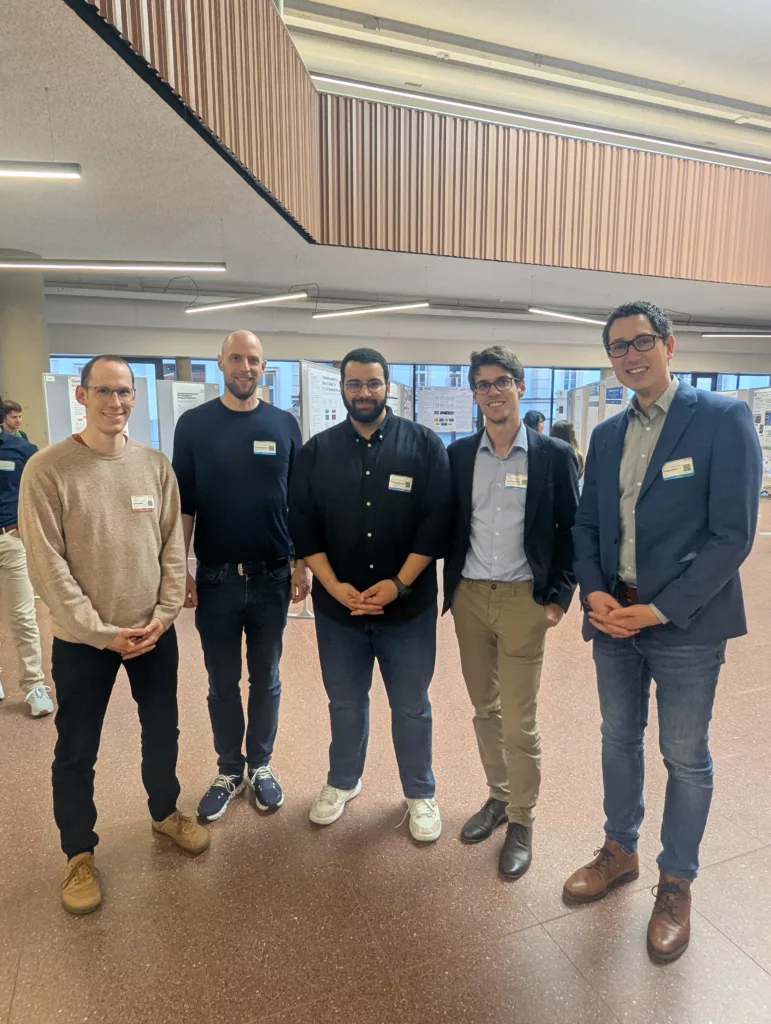
The “AI in Medicine” (AIM) workshop fills a gap: a comparable, nationally oriented platform dedicated to AI applications in healthcare had not previously existed in Austria. The workshop aims to create a forum that brings together interdisciplinary groups to present and discuss novel contributions, works in progress, emerging trends, and future challenges, with a focus on building a supportive environment for students and early-career researchers.
The workshop covered a broad range of topics: from medical image analysis and generative models to drug-discovery, medical LLMs, and time-series forecasting. Prof. Spiros Denaxas from IT:U Linz and University College London joined as an invited speaker, discussing how data and AI are being used to improve human health and healthcare. The workshop took place on April 14 and featured eight spotlight presentations from research institutions across Austria and Germany.
“AI in Medicine” was organized in collaboration with partners from MedUni Innsbruck, Johannes Kepler University Linz, and MedUni Vienna.
Alongside the workshop organization, Fabian Greifeneder and Maja Nikolic presented ongoing research from RISC Software GmbH.
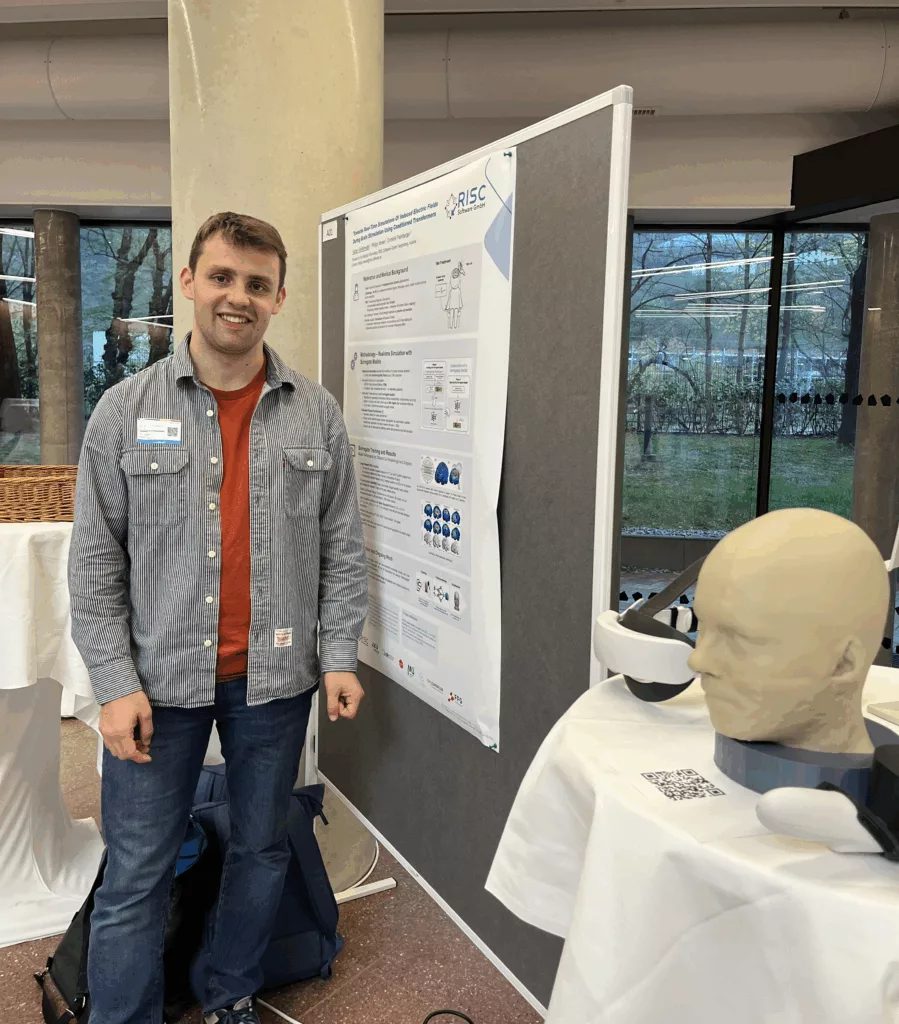
Fabian Greifeneder introduced an approach for real-time AI simulation of induced electric fields during Transcranial Magnetic Stimulation (TMS), complemented by a live demo of the TMS demonstrator. The method allows the effects of magnetic impulses on the brain to be calculated and visualized in real time, which is relevant for the precise planning of clinical applications.
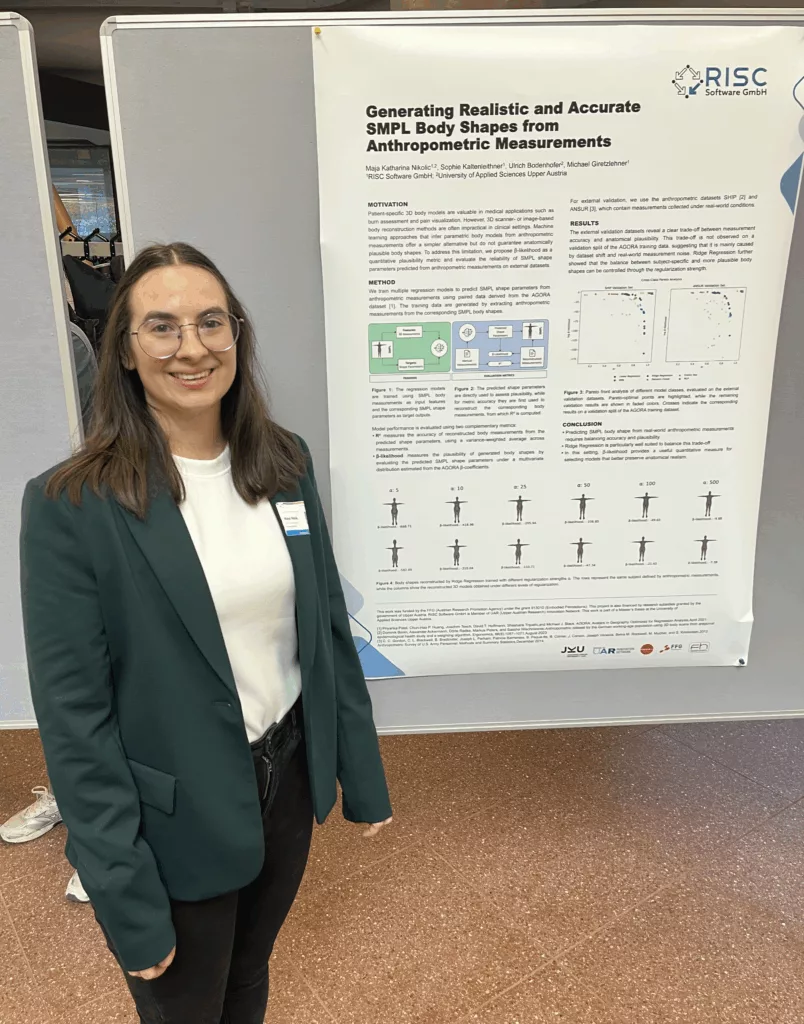
Maja Nikolic presented her work on AI-based body shape adaptation of 3D models to anthropometric measurements. The technique enables the visualization of pain on patient-specific body models, contributing to more precise and patient-centered communication in clinical settings.